
Future capacity arises from the ability to continuously develop.
I support companies in designing digital value creation as a learning, process-based and adaptable system. For clear decisions, consistently orchestrated processes and change that does not have to start all over again.
Why is this important?
01
Change is accelerating.
While organisations are transforming, their framework conditions are already changing again.
02
Learning speed decides.
Wettbewerbsfähig bleibt, wer schneller erkennt, erprobt, entscheidet und skaliert.
03
AI is changing the rules of the game.
It drives change and at the same time strengthens the ability to actively shape it.
The central leadership question
Can we learn faster than our competition?

Learning speed becomes a competitive advantage.
Die neue Realität
Transformation alone is no longer sufficient.
Digital transformation remains necessary. But it is not a final state. It makes the next leap in development. Future viability only arises when an organization can continue to learn, adjust and produce new value creation.

01. Change
The environment is moving faster
Markets, technologies and expectations change as programs are running. Rigid target images therefore lose their effect more quickly.
02. Ability
Change must be repeatable
Organizations need not only individual projects, but a reliable way to identify, test and implement opportunities.
03. Effect
Added value remains the benchmark
Technology is not an end in itself. It must enable better decisions, stronger processes and tangible benefits for customers and employees.
Artificial intelligence
AI changes the speed of learning.
AI is both a driver of change and an amplifier of our ability to shape this change. It shortens the path from a question to a reliable hypothesis and from an idea to a testable design.
Disruptor
AI is changing markets and business models
Amplifier
KI beschleunigt Analyse und Umsetzung
Enabler
AI makes continuous experimentation possible
Prozesse zuerst
AI does not unfold its value in individual tasks. But in the entire process.
A process-first approach does not start with a tool, a model, or an isolated use case. It begins with the desired result and the question of how work should flow end to end in the future.

Those who only use AI on existing processes often automate the logic of yesterday. Those who redesign processes change the value creation of tomorrow.
Micro-productivity is not enough
Individual tasks become faster. The entire process remains slow, brittle, or difficult to scale.
Interfaces decide on effect
Linking AI with measurable performance indicators
Legacy processes were built for another world
Many processes require that people coordinate, check and pass on information. AI changes precisely these basic assumptions.
Scaling is created by embedding
Only when AI, automation and human expertise are designed as a coherent system, a resilient effect is created in the company.
Process First means reprogramming the actual functioning of an organization. Not through technology alone, but through the conscious redesign of work, decisions and value creation.
01
Think backwards from the desired result. Don’t ask where AI can be supplemented, but how value will be created in the future
02
Check every step. Does it have to exist? Which decision, handover or control can be fundamentally redesigned?
03
Connect people, rules, data, systems, automation and AI agents along a consistent process.
04
Veränderungsfähigkeit
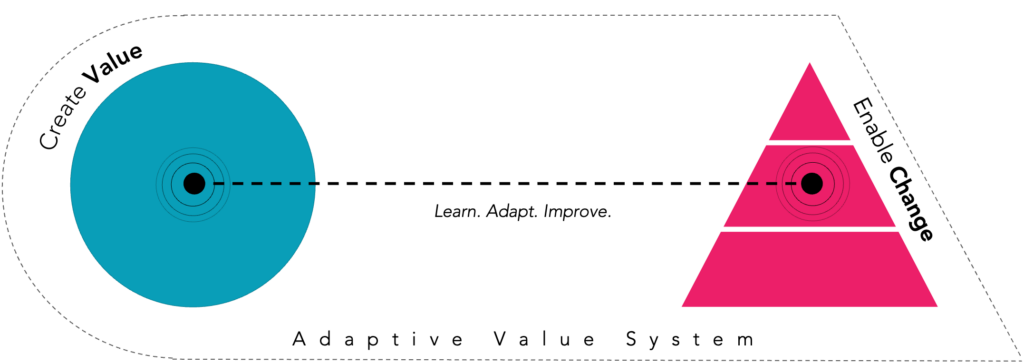
Digital value creation as a learning system
I help organizations to design their value creation process-based in such a way that it remains powerful, end-to-end orchestrated, intelligently automated and at the same time adaptable. Each development cycle should not only deliver a result, but make the entire flow of value and the organization stronger.
1
Explore
New possibilities, perspectives and solutions become visible.
2
Experiment
Assumptions are reviewed within a clear, controlled framework.
3
Get feedback
Customers, employees and data provide real insights.
4
Learn
Experiences are evaluated and translated into better decisions.
5
Scale
Effective solutions are converted into processes, structures and working methods.
New possibilities, perspectives and solutions become visible.
Assumptions are reviewed within a clear, controlled framework.
Customers, employees and data provide real insights.
Experiences are evaluated and translated into better decisions.
Effective solutions are converted into processes, structures and working methods.
Three levels of action
From orientation point to operating system for change
Three offers, effective together, individually selectable and combinable. Depending on whether direction, concrete process effect or permanent capacity for change are missing.
Automation & AI Staregy
-
Create orientation
Digital operating model that delivers, today and tomorrow.
- Future image and Ambition
- Prioritised Opportunity Fields
- Decision-making Roadmap
Outcome
A clear, shared strategic direction that aligns priorities, accelerates decisions, and turns ambition into focused, actionable initiatives with measurable business impact.
1
Proces Innovation
-
Re-designing value creation
Rethinking processes and accelerating with AI.
- Redesigning processes
- Orchestrate Implementation
- Plan continous evolution
Outcome
A radically redesigned end-to-end process that eliminates friction, harnesses automation where it matters, and delivers measurably better business performance.
2
Evolution Blueprinting
-
Empower change
Operating system for change that scales.
- Designing the innovation process
- Start Centre of Excellence
- Develop digital competences
Outcome
3
That fits
For whom this offer is made
- You are responsible for digital transformation in your organisation.
- You want to organise change together with your team.
- You are willing to make binding decisions.
- Strategy, processes and skills should be thought together.
- Their goal is an organisation that permanently shapes change from itself.
What customers say
Transforms. Connects. Works.



Next step
Your digital future is not finalised. But it can become designable.
Let us clarify where orientation is missing today, which processes should be rethought end-to-end and how scalable value creation and lasting capacity for change can arise from this.